
November 23, 2026
Can You Write Off a Farm Building in One Year? 100% Bonus Depreciation, Explained
By VEIL Construction Group
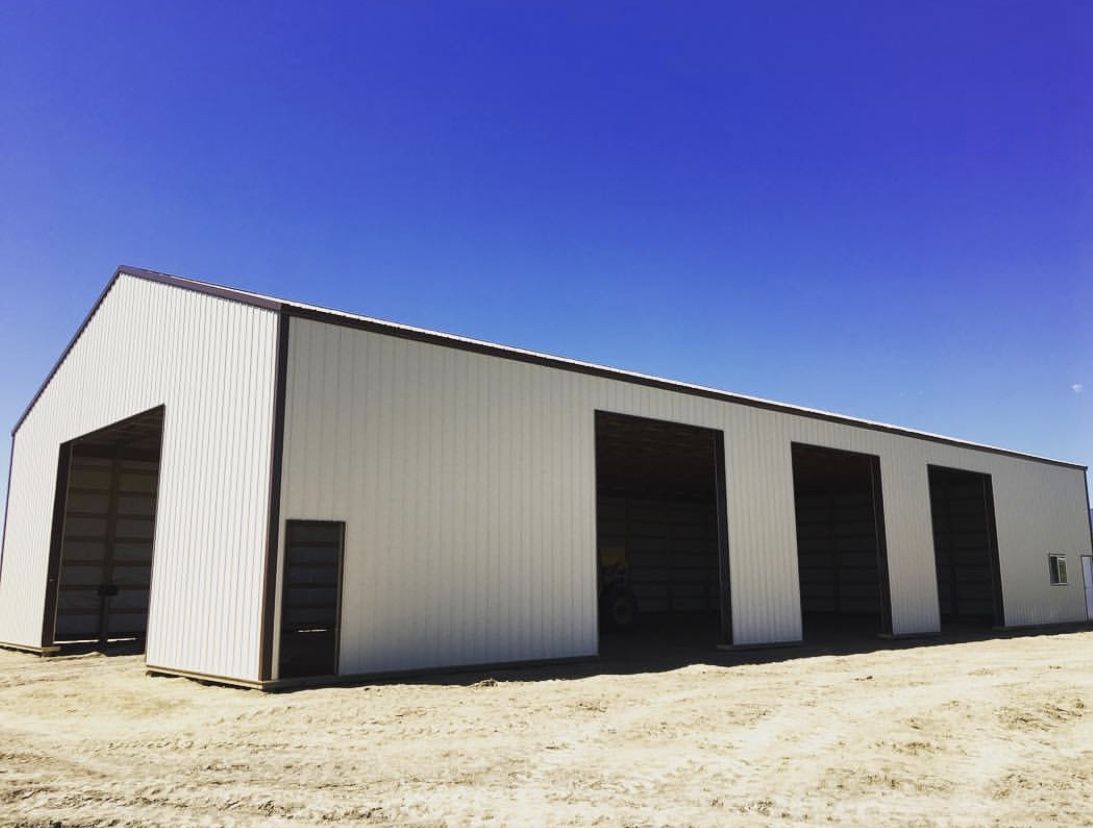
Can you write off a farm building in one year?
In many cases, yes, on your federal return. The One Big Beautiful Bill Act, signed July 4, 2025, made 100% bonus depreciation permanent for qualified property acquired after January 19, 2025. General-purpose farm buildings qualify. That means a new machine shed or equipment barn can often be deducted in full the year it's placed in service, instead of over 20 years.
That's the short version. The details below decide whether it works for your building and your year. We're a builder, not a tax firm. Use this to get ready for the conversation with your accountant, not to replace it.
What changed
Bonus depreciation lets a business deduct the cost of qualifying property up front. Under the 2017 tax law it was 100%, then it started stepping down: 80% in 2023, 60% in 2024, 40% in 2025, and it was headed to zero.
The 2025 law stopped that. For property acquired after January 19, 2025, the rate is 100% with no end date. Property under a binding contract signed before January 20, 2025 stays on the old phase-down schedule.
Which farm buildings qualify
Bonus depreciation covers property with a recovery period of 20 years or less. Here's how farm buildings fall:
| Building type | Examples | Federal recovery period | 100% bonus? | Section 179? |
|---|---|---|---|---|
| General-purpose farm building | Machine shed, equipment barn, hay and grain storage, shop used for the farm | 20 years | Yes | No |
| Single-purpose agricultural structure | Hog confinement, poultry house, milking parlor, a barn built only to house one type of livestock | 10 years | Yes | Yes |
| Single-purpose horticultural structure | Greenhouse, mushroom house | 10 years | Yes | Yes |
| Commercial building (non-farm business) | Shop or storage for a construction, trucking or retail business | 39 years | No | Generally no |
| Personal or hobby building | Garage for personal vehicles, a barn with no farm business | Not depreciable | No | No |
Two things jump out:
- The typical post-frame equipment barn is 20-year property, so it qualifies for bonus. It doesn't qualify for Section 179, which is reserved for single-purpose structures. With bonus at 100%, that gap matters a lot less than it used to.
- The same building can land in different rows depending on how it's used. A shop for your farm and a shop for your excavating business are taxed differently. Your accountant will ask how you use it, so know the answer before you build.
Bonus depreciation vs. Section 179
Both let you deduct up front, but they work differently.
- Section 179 is capped. The limit is $2.5 million for 2025 and about $2.56 million for 2026, and it phases out once you put roughly $4 million or more of qualifying property in service. It can't take your business income below zero.
- Bonus depreciation has no dollar cap and can create a loss. It applies automatically unless you elect out, and you elect out by class: all 20-year property in or out, for example.
For most general-purpose farm buildings, bonus depreciation is the tool. Section 179 comes into play for single-purpose structures and equipment.
"Placed in service" is the date that matters
The deduction lands in the year the building is placed in service, not the year you sign or pay. The IRS standard is when the property is ready and available for its specifically assigned function.
For a barn, that generally means substantially complete and usable for what it was built for, like parking equipment or storing hay. A deposit in December doesn't move the deduction into this year. A finished building in December can.
This is where timing gets real. If you want a building on this year's return, the build has to be done before December 31. Talk to your accountant early. And talk to your builder about a realistic finish date, not a hopeful one.
If you're reading this late in the fall, most new builds won't be finished by December 31. That's not a reason to wait. It's a reason to plan the building for next year's return and get on the schedule before the spring rush.
Ohio and Indiana don't follow the federal rule
This catches people off guard. Bonus depreciation is a federal deduction, and neither state fully follows it.
- Ohio requires most taxpayers to add back 5/6 of federal bonus depreciation, then deduct it in equal pieces over the next five years. In a year with a federal loss, the full amount is added back. Ohio also doesn't follow the higher federal Section 179 limits.
- Indiana decouples from federal bonus depreciation. You figure Indiana depreciation as if bonus wasn't taken, and Indiana's Section 179 limit is much lower than the federal one.
The federal deduction is where most of the savings are. Just don't expect your state return to mirror it.
A rough example
Say you farm in Ohio, you're profitable, and you put a $90,000 general-purpose equipment barn in service in 2027.
- Federal: with 100% bonus, the full $90,000 can be deducted in 2027. Without bonus, the first-year deduction on 20-year property is a small fraction of that.
- Ohio: about $75,000 (5/6) gets added back in 2027 and deducted over the following five years, about $15,000 a year.
What that's worth in dollars depends on your bracket, your entity and the rest of your return. That's the accountant's job.
Questions to bring your accountant
- Is the building I'm planning general-purpose (20-year) or single-purpose (10-year)?
- Do I want 100% bonus this year, or would spreading the deduction over time save more?
- If I want it on this year's return, what finish date do I need?
- How will Ohio or Indiana treat it, and what does that do to my state bill?
- What records do you want from the build: contract, invoices, completion date, photos?
Where we come in
We build post-frame farm buildings across Ohio and Indiana, and you can see a price range online before anyone drives out. When the building is done, ask us for the paperwork your accountant will want: the contract, the invoices and the date it was finished.
Design your building and see the price range, or call (419) 649-4808.
VEIL Construction Group is a builder, not a tax advisor. This article is general information as of November 2026 and isn't tax advice for your situation. Confirm everything with a qualified tax professional before you make a decision.